home // about // contact // guestbook
Electrostatics and Magnetostatics
Wiki: Deciphering the Atomic Scale
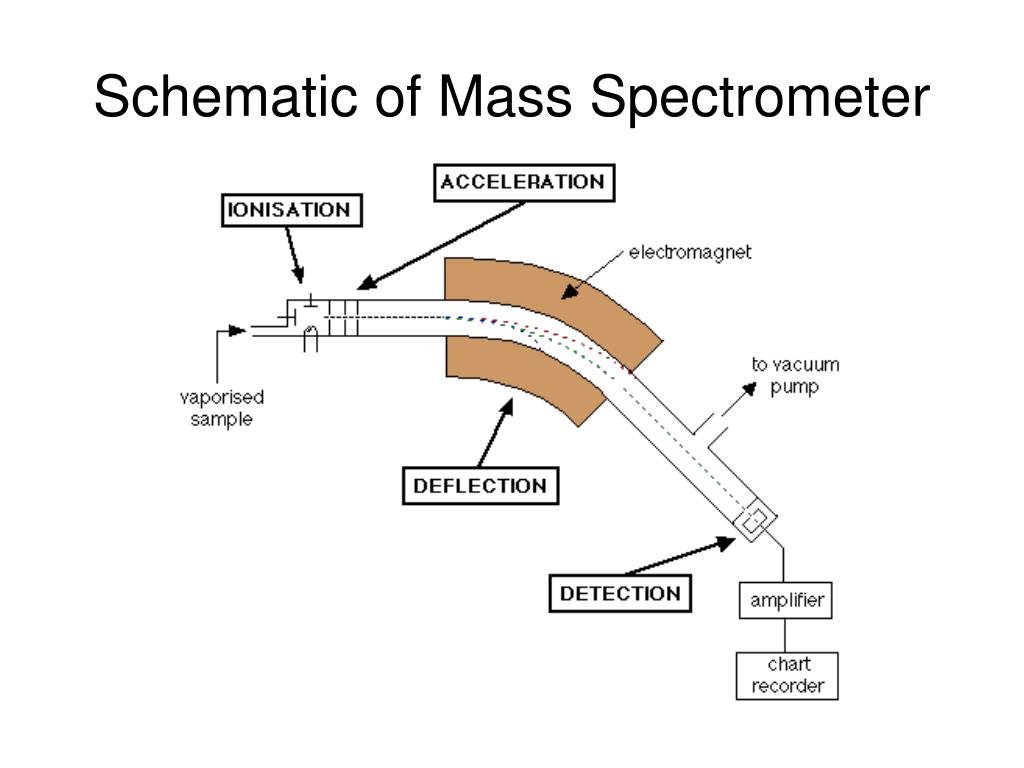
A Mass Spectrometer is a powerful scientific tool used to "weigh" individual atoms and molecules. By using the rules of electrostatics and magnetostatics, researchers can figure out exactly what a substance is made of. The whole process happens in three main steps: giving the atoms a charge, ensuring they are all running at the same speed, and then tossing them through a magnetic curve.
Ionization
Electric and magnetic fields can't push or pull on neutral objects. So, before atoms are weighed, they are turned into ions. Scientists do this by zapping the sample with a beam of high-energy electrons. This knocks the atom's own negative electrons away, leaving the atom with a net positive charge. Once charged, an electric field is used to pull the atom forward to be sped up!
The Velocity Selector
When we speed up the ions, they don't all go the same speed. If we try to weigh them while some are moving at various speeds, our math will be falter. To fix this, the ions pass through a "velocity selector." This is a tunnel where an electric field (E) pushes the ions in one direction (Fe = qE), while a magnetic field (B) pushes them in the exact opposite direction (Fm = qvB).
It works like a filter, only the ions going the perfect speed will have those two forces balance out perfectly (qE = qvB). With some algebra, we find that this perfect speed is just v = E / B. Any ion going too fast or too slow gets pushed into the walls. Only the perfect ones make it through the exit slit.
Magnetic Deflection
Now we have a neat line of ions all traveling at the exact same speed. They enter a new room that only has a uniform magnetic field. Just like a car taking a sharp turn, the magnetic force acts as a centripetal force, pushing the moving ions into a circular path.
Consider a heavy truck and a lightweight sports car taking the same curve at the same speed. The light car could turn sharply, but the truck must take a wider path. The same thing happens to the ions! The magnetic force (qvB) is equivalent to the centripetal force (mv2 / r). The lighter ions have a small radius (r), and the heavier ions have a large radius. The formula for this is m = (qBr) / v. A computer simply measures where the ions hit the wall (the radius) and instantly knows their exact mass!
Modern Applications
This isn't purely theory; mass spectrometry is used everywhere in the real world today.
• Forensics: Investigators use it to identify tiny traces of unknown drugs, explosives, or toxins left at a scene.
• Space Exploration: NASA’s Curiosity rover actually has a mass spectrometer inside of it! It scoops Martian dirt, vaporizes it, and uses magnetic fields to make discoveries about the surface of Mars.
• Medicine and Sports: It is the standard tool used to test athletes for performance-enhancing drugs, because it can find even the most hidden molecules in a blood sample.
 Podcast
In this episode, we break down the engineering behind Transformers, Generators, and Motors. We explore how modern hybrid General Support Motors are meeting strict efficiency standards by acting as both torque drivers and kinetic energy recapturers.
Editorial: The Invisible Cord
We’ve been promised a "wireless" future for decades, but the reality has always been more complicated than the marketing. Induction and conduction have long been at odds, but recent advancements in consumer technology are seeing a shift toward magnetic resonance that might finally "cut the cord" for good.
While updated standards (like Qi2) have made wireless charging more reliable by solving the alignment issue via magnetic locking, the real question is efficiency. We are currently accepting a 10% to 15% power loss in exchange for the convenience of setting a phone on a pad, rather than plugging it in.
There is fascinating research happening with resonant coupling right now. It might eventually let us charge things with almost perfect efficiency from across a desk with no charging pad required. But until that becomes a commercial reality, we’re sacrificing sustainability just so our nightstands look a bit cleaner. The old-school copper wire might not look like the future, but for now, it’s still the absolute best, greenest way to power our lives.
Works Cited
LibreTexts. “Physics of Mass Analyzers.” Chemistry LibreTexts, National Science Foundation, https://chem.libretexts.org/Bookshelves/Analytical_Chemistry/Supplemental_Modules_(Analytical_Chemistry)/Instrumental_Analysis/Mass_Spectrometry.
NASA. "Sample Analysis at Mars (SAM) Instrument." NASA Mars Exploration Program, https://mars.nasa.gov/msl/spacecraft/instruments/sam/.
Nature. “Mass Spectrometry Principles.” Nature Subjects, Macmillan Publishers, https://www.nature.com/subjects/mass-spectrometry.
Wireless Power Consortium. “The Evolution of Qi2.” WPC, https://www.wirelesspowerconsortium.com/qi/.
Podcast
In this episode, we break down the engineering behind Transformers, Generators, and Motors. We explore how modern hybrid General Support Motors are meeting strict efficiency standards by acting as both torque drivers and kinetic energy recapturers.
Editorial: The Invisible Cord
We’ve been promised a "wireless" future for decades, but the reality has always been more complicated than the marketing. Induction and conduction have long been at odds, but recent advancements in consumer technology are seeing a shift toward magnetic resonance that might finally "cut the cord" for good.
While updated standards (like Qi2) have made wireless charging more reliable by solving the alignment issue via magnetic locking, the real question is efficiency. We are currently accepting a 10% to 15% power loss in exchange for the convenience of setting a phone on a pad, rather than plugging it in.
There is fascinating research happening with resonant coupling right now. It might eventually let us charge things with almost perfect efficiency from across a desk with no charging pad required. But until that becomes a commercial reality, we’re sacrificing sustainability just so our nightstands look a bit cleaner. The old-school copper wire might not look like the future, but for now, it’s still the absolute best, greenest way to power our lives.
Works Cited
LibreTexts. “Physics of Mass Analyzers.” Chemistry LibreTexts, National Science Foundation, https://chem.libretexts.org/Bookshelves/Analytical_Chemistry/Supplemental_Modules_(Analytical_Chemistry)/Instrumental_Analysis/Mass_Spectrometry.
NASA. "Sample Analysis at Mars (SAM) Instrument." NASA Mars Exploration Program, https://mars.nasa.gov/msl/spacecraft/instruments/sam/.
Nature. “Mass Spectrometry Principles.” Nature Subjects, Macmillan Publishers, https://www.nature.com/subjects/mass-spectrometry.
Wireless Power Consortium. “The Evolution of Qi2.” WPC, https://www.wirelesspowerconsortium.com/qi/.